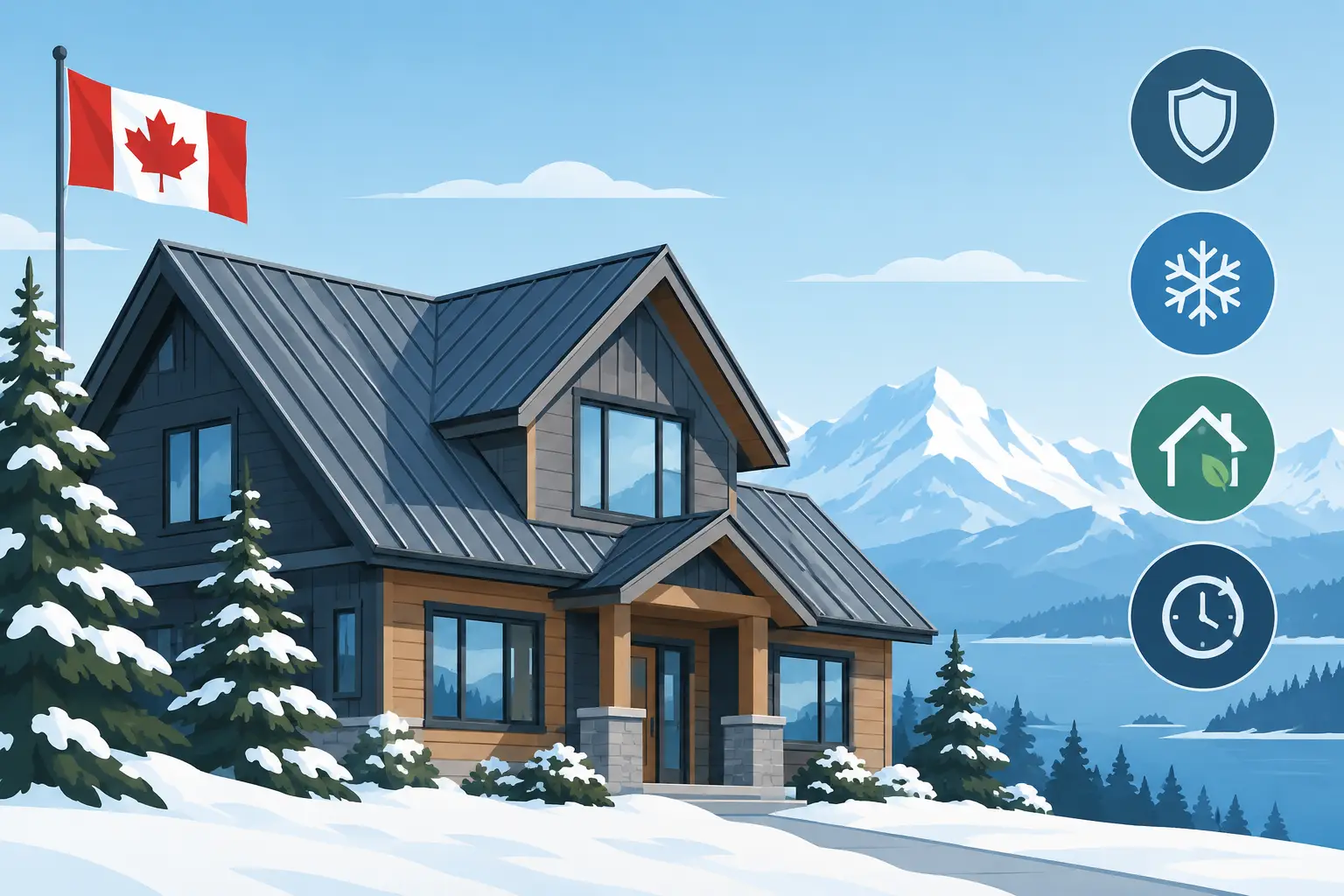
A roof in Canada is asked to perform through more than a few rainy weekends. It must manage snow loads, wind, freeze-thaw cycles, driving rain, intense summer sun, and long periods where small installation details are tested repeatedly. That is where metal roofing benefits become especially compelling for owners who are planning beyond the next repair cycle.
Premium steel roofing is not simply a different surface material. Properly designed and installed, it is a high-performance exterior system that can protect the structure, sharpen the building’s architectural character, and reduce the disruption associated with frequent roofing replacement. The value, however, depends on the roof design, the quality of the material, and the precision of the installation.
Metal Roofing Benefits That Matter Over Time
The first advantage most owners recognize is service life. A quality steel roof can remain in service for decades when the system is suited to the building and installed with disciplined attention to flashings, fasteners, transitions, ventilation, and drainage. Compared with materials that can become brittle, curl, or lose granules over time, coated steel is engineered to hold its form and finish through demanding weather exposure.
That longevity changes the economics of the project. A metal roof often carries a higher initial cost than a basic asphalt roof, particularly when custom flashings, complex geometry, or structural upgrades are involved. Yet the comparison should account for replacement cycles, maintenance demands, disposal, disruption to occupants, and the risk of repeated repairs. For a long-term residence, commercial property, or specialty build, the installed value can be stronger than the purchase price alone suggests.
Steel roofing also offers reliable resistance to wind, rain, and snow when it is properly detailed. Interlocking panels and concealed fastening systems can create a clean, tightly managed weather barrier. On low-slope or complex roofs, this level of coordination is particularly valuable because water does not forgive shortcuts around penetrations, valleys, parapets, skylights, or wall transitions.
Built for Canadian Weather, Not Just Good Looks
Canadian climates make roof design a technical consideration rather than a finishing choice. Snow accumulation, ice formation, thermal movement, and seasonal temperature swings all affect how a roof should be specified and installed. Steel is well suited to these conditions, but performance is never automatic.
A smooth metal surface can shed snow more readily than a textured roof covering. That can reduce lingering snow loads in appropriate applications, but it also means snow retention must be planned where falling snow could affect entrances, walkways, mechanical equipment, or lower roof sections. Snow guards, panel layout, and drainage strategy should be addressed before installation, not added as an afterthought.
Thermal movement deserves the same level of care. Metal expands and contracts with temperature changes, so panel profiles, clip systems, fastening methods, and flashing details must allow the roof to move as designed. A premium installation is not merely straight panels on a deck. It is a coordinated system that accounts for material behaviour at every edge and transition.
For properties in exposed locations, the finish specification matters as much as the panel profile. Coating selection should reflect the building’s environment, including sun exposure, moisture, urban pollutants, or salt air. The goal is a roof that continues to look considered while delivering practical protection year after year.
A Refined Architectural Finish
Metal roofing gives architects, builders, and homeowners more control over the finished appearance of a building. Standing seam profiles create long, disciplined lines that suit modern homes, commercial façades, rural properties, and custom additions. Corrugated and exposed-fastener profiles can offer a more industrial or agricultural character when that is right for the project.
Colour, panel width, rib height, trim design, and the treatment of roof-to-wall transitions all influence the final result. These details are not cosmetic extras. They determine whether the roof reads as a cohesive part of the architecture or as a material added at the end of construction.
This is one reason custom craftsmanship matters. A roof with hips, valleys, dormers, chimney penetrations, or intersecting elevations needs carefully fabricated components to maintain both weather performance and visual order. Standardized shortcuts can leave awkward lines, excessive sealant, or exposed problem areas. Tailored flashings and clean terminations create a sharper finish while protecting the building where it is most vulnerable.
Lower Maintenance Does Not Mean No Maintenance
One of the most practical metal roofing benefits is reduced routine maintenance. Steel does not absorb moisture like some materials, and it does not rely on loose granules to protect its surface. Owners can generally expect fewer recurring concerns than with roofing systems that weather quickly under harsh exposure.
Still, a premium roof should be inspected periodically. Leaves and debris need to be cleared from valleys and gutters. Sealant-dependent details, roof penetrations, snow retention systems, and drainage points should be reviewed, especially after severe storms. Nearby tree branches should be managed so they do not rub against the panels or restrict water flow.
Maintenance is also easier when the roof has been designed for access and service from the start. Clear drainage paths, properly positioned mechanical penetrations, and sensible detailing reduce future complications for property managers and service trades.
Energy Performance Depends on the Assembly
Metal roofing can contribute to better building performance, particularly when colour, ventilation, insulation, and air sealing are considered together. Lighter finishes may reflect more solar heat than darker finishes, which can be beneficial in warm conditions. Ventilated assemblies can also help manage heat at the roof deck.
However, a metal panel alone does not solve energy loss. In a Canadian building, insulation levels, attic ventilation, vapour control, air leakage, and thermal bridging often have a greater effect on comfort and operating costs. Owners should be cautious of broad energy-saving promises that ignore the full roof and wall assembly.
The opportunity is strongest during a major renovation or new build, when roofing, structural work, insulation, and drainage can be coordinated as one scope. That approach supports a better-performing envelope and avoids the common problem of one trade completing work that complicates the next.
Where Metal Roofing Requires More Planning
Steel roofing is a strong choice for many projects, but it is not the right answer in every situation. Budget-sensitive projects with a short ownership horizon may favour a lower-cost roofing material. A roof with significant deck deterioration, inadequate slope, or unresolved ventilation issues may need structural and envelope work before new panels are considered.
Installation quality also has an outsized effect on the result. Incorrect fastener placement, poorly formed flashing, incompatible materials, or rushed penetrations can compromise an otherwise excellent product. Metal roofing should be handled by contractors who understand both the manufacturer’s system requirements and the building-specific conditions in front of them.
Noise is another concern that deserves context. Rain on exposed metal can sound different from rain on asphalt, but in a properly insulated residential or commercial roof assembly, interior noise is often far less noticeable than people expect. The roof deck, insulation, ceiling construction, and attic or cavity space all influence the outcome.
Coordinating Roofing With Structural Craftsmanship
The best roofing decisions often begin before panels are ordered. If a project includes a new addition, custom overhang, porch, canopy, structural steel, timber work, or façade change, the roofing system should be coordinated with those elements early. This protects the design intent and reduces costly field adjustments once multiple trades are on site.
For Double A Multi-trade, premium steel roofing and custom structural craftsmanship belong in the same conversation. A clean roofline depends on accurate framing, properly supported transitions, durable drainage details, and fabrication that respects the architecture. Bringing those connected considerations together helps owners and project teams make decisions with the whole exterior in view.
A well-specified metal roof is an investment in how a property performs, presents itself, and ages. The most useful next step is not choosing a colour first. It is reviewing the building’s roof geometry, structural condition, exposure, drainage, and long-term plans so the system can be built to serve the property for decades.