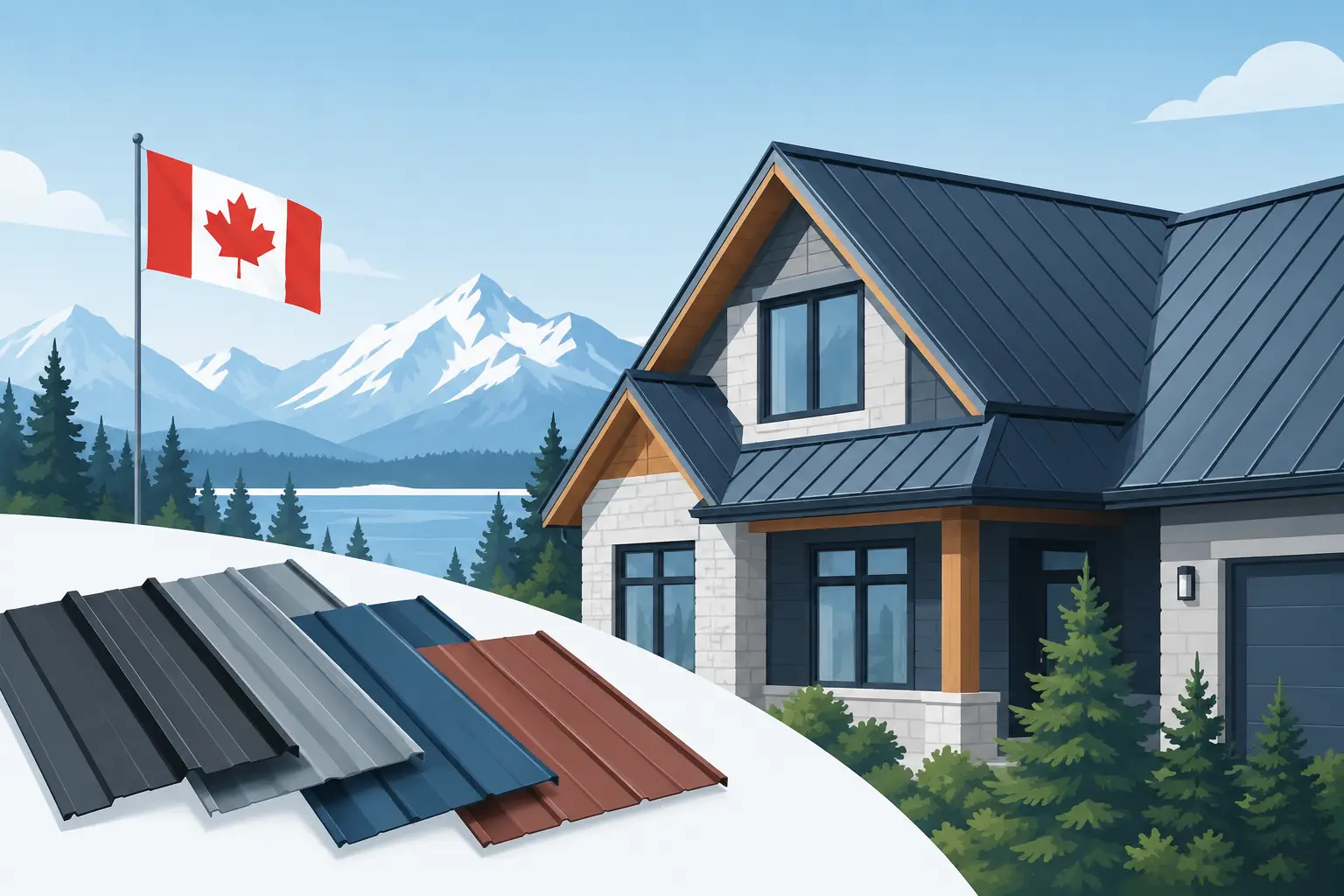
A steel roof is not simply a tougher substitute for shingles. It is a complete exterior system that must manage snow, wind, water, thermal movement, ventilation, and the visual character of the building. Knowing how to choose steel roofing means looking beyond colour samples and price per square foot to the details that determine whether the roof performs for decades.
For Canadian property owners, builders, and project teams, the right decision starts with the building itself. Roof geometry, structural condition, exposure, architectural intent, and the quality of the installation all matter. Premium materials deserve equally precise planning and execution.
Start With the Building, Not the Panel
Steel roofing performs exceptionally well in Canadian conditions, but no single panel profile is right for every project. A low-slope commercial roof, a steep gable on a custom home, and a complex renovation with valleys, dormers, and transitions each demand a different approach.
Begin by assessing roof pitch, span, existing deck condition, drainage paths, snow accumulation, and the location of penetrations such as vents, skylights, chimneys, and mechanical equipment. On older homes, this assessment may also reveal framing, fascia, or sheathing work that should be addressed before the roof is installed. Covering a weak substrate with a premium steel system is not a premium solution.
This is where coordinated roofing and structural expertise creates real value. The roofing scope can be designed around the building's actual needs rather than treated as an isolated finish layer.
How to Choose Steel Roofing by Profile
The profile affects appearance, weather performance, installation method, and cost. It should suit the architecture while meeting the practical demands of the roof.
Standing seam for refined, long-term performance
Standing seam is often the preferred choice for high-end residential, architectural, and light commercial work. Its raised seams create a clean, linear appearance, and concealed fasteners reduce the number of exposed points where water can enter over time. It is particularly well suited to contemporary homes, custom additions, and projects where the roof is a visible design feature.
Standing seam systems also allow for controlled thermal movement. Steel expands and contracts as temperatures change, and a properly specified clip system gives the panels room to move without stressing the fasteners or finish. This detail matters in climates that see significant seasonal temperature swings.
Not every standing seam panel is equivalent. Seam height, panel width, clip design, gauge, substrate, and locking method all influence performance. A wider panel may create a quieter visual field, for example, but may require more careful engineering in high-wind exposure. The best choice depends on the roof layout and site conditions.
Exposed-fastener panels for practical applications
Exposed-fastener steel panels can be a sound option for agricultural, utility, industrial, and selected budget-conscious projects. They offer a distinct profile and can be installed efficiently on straightforward roof forms.
The trade-off is maintenance and detailing. Fasteners penetrate the panel face, and their washers are a service item over the long term. On complex roofs or premium residences, the visual and performance advantages of concealed-fastener systems often justify the higher initial investment. Exposed-fastener roofing is not inherently poor quality, but it must be selected for the right building and installed with discipline.
Steel shingles and tile profiles
Steel shingles, shakes, and tile-inspired panels can suit traditional architecture where the owner wants metal's longevity without a strong contemporary seam pattern. They can be effective for renovations in established neighbourhoods, but their performance depends heavily on the interlocking system, flashing design, and installer experience.
Specify the Steel, Coating, and Finish Carefully
A roof's expected service life is shaped by more than the word “steel.” Material thickness, protective metallic coating, paint system, and forming quality should all be reviewed.
Gauge is one useful indicator, although it should not be considered in isolation. Thicker steel can provide greater resistance to denting and a more substantial feel, but the appropriate gauge depends on the panel profile, support spacing, roof geometry, and engineered wind or snow requirements. A well-designed system uses the right material specification for the application rather than relying on a single selling point.
The protective coating beneath the paint is especially relevant in wet, snowy, or coastal environments. Galvanized and aluminum-zinc alloy coatings are common options, each with different strengths. The right choice depends on local exposure, roof design, and the manufacturer's approved application. In areas with salt exposure or persistent moisture, material selection and drainage detailing deserve additional attention.
For the visible finish, choose a high-quality paint system designed for exterior metal roofing. Colour affects more than curb appeal. Dark roofs absorb more heat, while very light colours can reduce heat gain but may show dirt differently. Matte finishes can create a sophisticated architectural look, though they may require careful handling during installation to avoid marking. Review full-size samples outdoors, not only small swatches viewed under indoor lighting.
Design for Canadian Snow, Ice, and Water Management
A steel roof sheds snow efficiently, which is an advantage until that snow lands where people, vehicles, landscaping, or lower roof sections are located. Snow retention should be planned, not added as an afterthought. Properly engineered snow guards can manage release in high-traffic areas while protecting gutters and lower structures.
Ice control is equally important. Ice dams are usually a building-envelope issue involving heat loss, air leakage, insulation, and ventilation, not simply a roofing-material failure. A quality steel roof installation should be coordinated with appropriate underlayment, eave protection, ventilation strategy, and attic conditions. If the building is losing heat into the roof cavity, changing roof materials alone will not solve the underlying problem.
Flashing deserves the same attention as the panels. Valleys, wall transitions, chimneys, skylights, plumbing vents, and roof-to-roof intersections are where craftsmanship becomes visible in performance. These details need properly formed metal, sound water paths, and compatibility with adjacent materials. Generic, site-improvised solutions can compromise an otherwise excellent roof.
Account for Noise, Condensation, and Energy Performance
Concerns about rain noise are common, especially for homeowners moving from asphalt shingles. In a complete roof assembly with solid sheathing, underlayment, insulation, and finished interior ceilings, steel roofing is not typically disruptive. An open structure such as a workshop, canopy, or uninsulated garage will behave differently, so expectations should be set according to the assembly.
Condensation management is more critical than noise. Warm interior air that reaches cold roof surfaces can create moisture problems if the assembly lacks correct air sealing, insulation, ventilation, or vapour control. This is particularly relevant in conditioned buildings and structures with high interior humidity. The roofing contractor, designer, and insulation trade should work from a coordinated plan rather than making isolated decisions on site.
If energy performance is a priority, discuss cool-roof colour options, insulation upgrades, ventilation, and air-sealing work together. Steel can support a high-performing envelope, but it cannot compensate for deficiencies below the roof deck.
Evaluate the Installation Scope, Not Just the Quote
Comparing steel roofing quotes only by total price can be misleading. Two proposals may name the same panel type while including very different levels of preparation, flashing, waterproofing, trim work, and site coordination.
A detailed scope should clarify whether existing roofing will be removed, how the deck will be inspected, what underlayment is included, how valleys and penetrations will be flashed, and how eaves, rakes, ridge caps, and wall transitions will be finished. It should also identify responsibilities for gutters, snow guards, skylight integration, disposal, and protection of landscaping or adjacent finishes.
Ask who will perform the work, how changes will be documented, and how the contractor handles weather delays or concealed structural issues. Premium steel roofing is a precision trade. The installation crew's experience with the selected system is as consequential as the manufacturer and panel colour.
Double A Multi-trade approaches roofing with the same attention given to custom structural craftsmanship: the visible finish matters, but so do the hidden conditions that allow it to endure.
Choose for the Full Service Life
Steel roofing often carries a higher initial cost than conventional asphalt shingles, particularly when using a concealed-fastener architectural system with custom flashing. The relevant question is not whether it is the least expensive roof this season. It is whether its performance, maintenance profile, appearance, and expected longevity justify the investment for the building.
A lower-priced steel proposal may omit essential details, use a lighter specification, or leave structural corrections for later. Conversely, the most expensive option is not automatically appropriate if the panel system does not suit the roof pitch or building style. Value comes from a specification that is technically sound, visually considered, and installed by specialists who understand the complete assembly.
The strongest steel roof is chosen before material is ordered: after the building has been assessed, the details have been resolved, and the installation plan reflects the climate it must withstand. That preparation is what turns a metal roof from an attractive upgrade into a lasting part of the property.