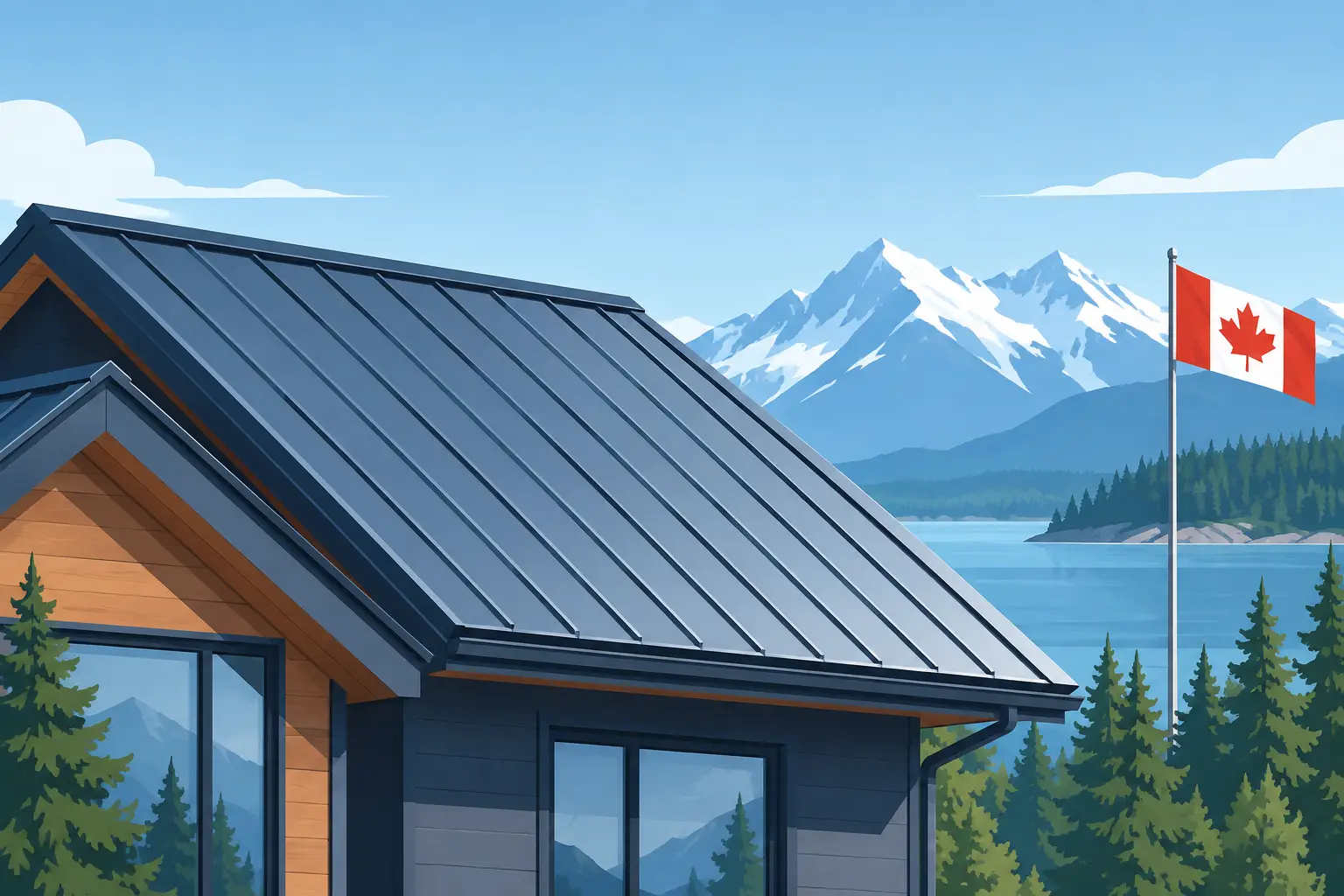
A steel roof is often chosen once, then relied on for decades. When clients ask, “how long does steel roof last?”, the honest answer is not a single number. Material quality, roof design, installation precision, local weather exposure, and maintenance all determine whether a roof performs as a long-term asset or falls short of its potential.
For Canadian homes and commercial buildings, a properly specified and professionally installed steel roof can commonly last 40 to 70 years. Premium standing-seam systems, particularly on well-designed roof assemblies, can remain serviceable beyond that range. The distinction matters: steel is exceptionally durable, but the roof is a complete system. Panels, coatings, fasteners, flashing, ventilation, underlayment, drainage, and structural details must work together.
How Long Does a Steel Roof Last?
Most high-quality steel roofing systems are designed for a service life of at least 40 years, with many lasting 50 years or more. That compares favourably with conventional asphalt shingles, which may need replacement two or three times over the life of one well-executed steel roof.
The expected lifespan varies by roofing profile. A premium standing-seam steel roof generally offers the longest service life because its concealed fastener design limits exposed points of water entry and allows panels to move with temperature changes. Steel shingles, tiles, and other formed profiles can also perform exceptionally well, provided their fastening and flashing details are correctly executed.
Exposed-fastener steel panels have a place on agricultural, industrial, and some residential applications, but they require more attention over time. Fastener washers can age, screws may need adjustment, and penetrations need periodic inspection. A lower initial price does not necessarily make this system the right choice for a high-end residence or a building where long-term appearance and weather protection are priorities.
The Steel Itself Is Only Part of the Equation
Steel roofing is valued for its strength, resistance to impact, and ability to shed rain and snow efficiently. Yet not all steel panels are equal. The base metal thickness, protective metallic coating, paint system, panel profile, and fabrication quality each affect long-term performance.
A premium panel begins with steel that has an appropriate protective coating, such as galvanized or aluminum-zinc alloy coating, and a durable factory-applied finish. This layered protection helps resist corrosion, ultraviolet exposure, moisture, and the gradual wear created by changing Canadian seasons. The finish also has an architectural role. A roof should retain a refined, even appearance rather than fade unevenly or develop premature chalking.
Material selection should reflect the project environment. A property near saltwater, a heavily treed site with persistent organic debris, and a rural building exposed to agricultural contaminants each create different corrosion risks. In these locations, selecting the right panel and coating is not an upgrade made for appearance alone. It is a performance decision.
Paint warranties are not the same as roof life
A manufacturer’s finish warranty can be useful, but it should not be mistaken for a full guarantee of roof performance. Paint warranties typically address specific concerns such as film integrity, chalking, or colour fade under defined conditions. They do not replace sound detailing, proper installation, or regular building maintenance.
A roof may remain watertight and structurally sound long after its finish warranty has ended. Conversely, even excellent steel can experience early problems if flashing is poorly integrated, incompatible materials are used, or water is allowed to sit where it should drain.
Installation Quality Sets the Ceiling for Performance
A steel roof can be manufactured to a high standard and still underperform if it is installed without precision. This is where specialized roofing workmanship becomes decisive.
Standing-seam panels expand and contract as temperatures change. A correct installation allows for that movement while keeping seams, clips, eaves, ridges, valleys, and wall transitions weather-tight. Restricting panel movement can lead to oil canning, stressed fasteners, distorted trim, or premature wear at connection points.
Flashing deserves equal attention. Chimneys, skylights, plumbing vents, dormers, parapets, valleys, and roof-to-wall transitions are where many roof failures begin. These details cannot be treated as afterthoughts. They require careful sequencing with the underlayment and drainage plane so water is directed out and away from the building.
The substrate also matters. Steel panels need a stable, properly prepared deck or support system. On custom homes, additions, and architecturally complex roofs, the roofing scope often connects directly to structural work. Correcting framing irregularities, planning attachment points, and coordinating penetrations before panels arrive can prevent compromises that are difficult to hide later.
Canadian Weather Changes the Maintenance Conversation
Steel roofing is well suited to snow, wind, rain, and freeze-thaw cycles, but Canadian weather rewards thoughtful design. A roof installed in Southern Ontario faces different demands than one on the Prairies, in the Rockies, or on the Atlantic coast.
Heavy snow loads make roof pitch, structural capacity, snow retention, and drainage planning essential. Steel’s smooth surface can allow snow to release quickly, which is useful in some settings but may create hazards over entrances, walkways, mechanical equipment, or lower roof sections. Properly engineered snow guards manage that release without compromising the roof assembly.
Ice dams are another concern. They are not usually a failure of the steel panel itself. They are commonly connected to heat loss, inadequate attic ventilation, insulation gaps, or drainage limitations. A premium roof installation should be considered alongside the building envelope, especially during a major renovation or new construction project.
Coastal exposure, road salt, industrial pollutants, and leaf accumulation can all accelerate wear if neglected. Keeping valleys, gutters, and drainage paths clear helps prevent standing water and trapped debris from working against the protective finish.
What Helps a Steel Roof Reach Its Full Lifespan?
Steel roofing requires less routine maintenance than many other roofing materials, but “low maintenance” does not mean “no maintenance.” A simple inspection program protects the investment and catches small issues before they become interior damage.
At least once a year, and after major wind events, inspect the roof from the ground where possible and arrange a professional assessment when access or safety is a concern. Look for displaced trim, blocked gutters, accumulated debris, damaged sealant around penetrations, and areas where different metals may be in direct contact. Never walk on a steel roof without understanding the panel system and safe access requirements. Improper foot traffic can mark panels, affect seams, or damage flashings.
Trees should be trimmed back where branches scrape the roof or continuously deposit needles and leaves. Avoid harsh abrasive cleaning methods and unapproved chemical treatments. If a localized scratch exposes bare metal, prompt professional attention can prevent corrosion from expanding.
For commercial properties, a documented maintenance schedule is particularly valuable. It supports asset planning, helps preserve warranty coverage where applicable, and gives facilities teams a clear record of the roof’s condition over time.
Signs a Steel Roof Needs Attention Sooner
A steel roof rarely fails without warning. Water staining indoors, loose or rattling trim, recurring leaks around penetrations, visible corrosion, lifting fasteners, or deteriorated sealant are signals that should be addressed quickly.
Appearance alone can be misleading. Minor oil canning, for example, is a visual waviness that can occur in broad metal panels due to tension, substrate variation, or changing light. It does not automatically mean the roof is leaking or nearing the end of its life. A qualified contractor can distinguish cosmetic characteristics from performance concerns.
The same principle applies to older roofs. A faded finish does not necessarily require full replacement, while corrosion at a critical flashing detail may demand immediate work. The right response depends on the cause, location, and effect on the overall roof system.
Planning for a Roof That Lasts
The longest-lasting steel roofs are not selected by colour and profile alone. They are planned around the building’s structure, exposure, drainage, ventilation, and architectural details. This is especially relevant for custom homes, additions, commercial upgrades, and projects with complex rooflines where several trades intersect.
Before committing to a system, ask how the panel will be attached, how thermal movement will be accommodated, what underlayment suits the assembly, how snow will be managed, and how penetrations will be flashed. These questions reveal whether the proposal is built around long-term performance or simply the fastest path to installation.
A premium steel roof should feel considered from the first detail to the final trim line. Double A Multi-trade approaches steel roofing with that standard of craftsmanship, coordinating the roofing and structural details that protect both the building and its finished appearance.
A roof expected to serve for half a century deserves more than a replacement quote. It deserves a clear scope, appropriate materials, and a contractor prepared to account for the details that weather will test year after year.